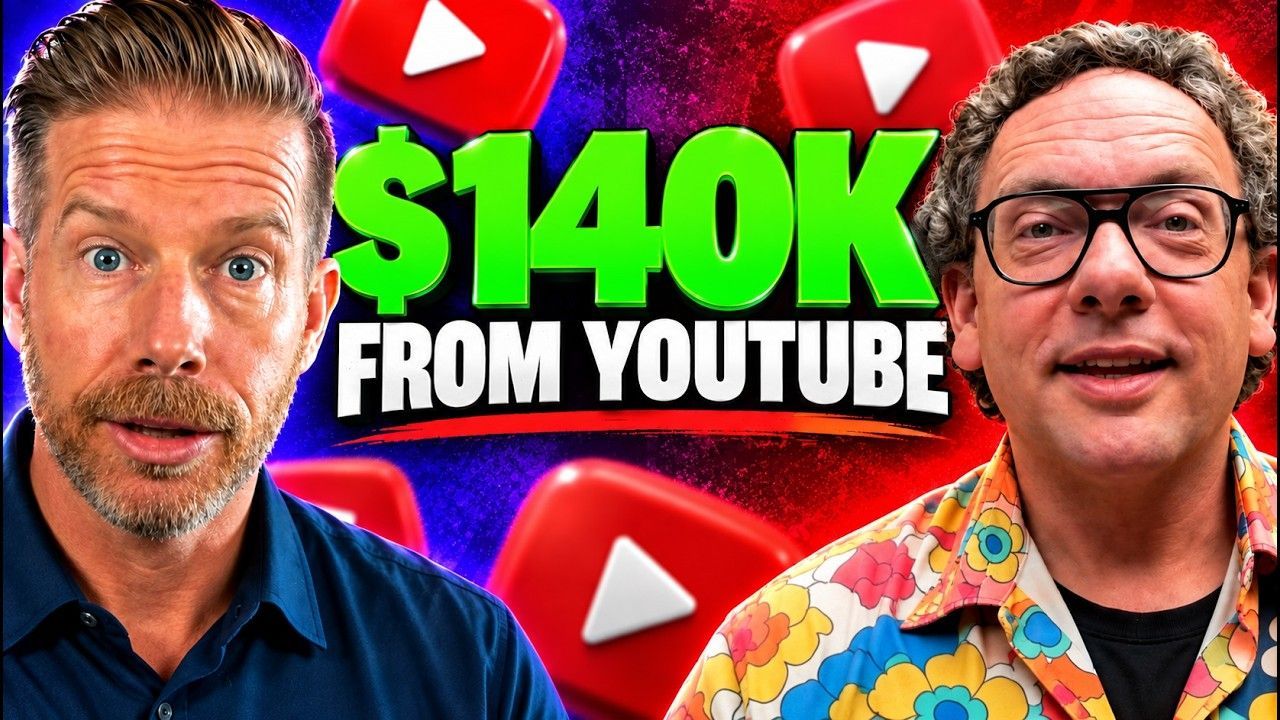
Cold calling, door knocking, and burning cash on ad campaigns can drain the life out of any real estate agent. If you are tired of the endless grind, there is a better way to build a sustainable, highly profitable business without chasing leads down manually. I sat down with my good friend Chris Roberts , a real estate agent based out of Southeast Tennessee who lives in a tiny community of just 500 people. Despite operating from such a small footprint, Chris closed 14 deals totaling $6.5 million in production and roughly $140,000 in GCI over the last 12 months —all generated passively from YouTube. Here is how Chris turned video content into a lead engine, survived a tough first year, and built a consistent stream of inbound clients.
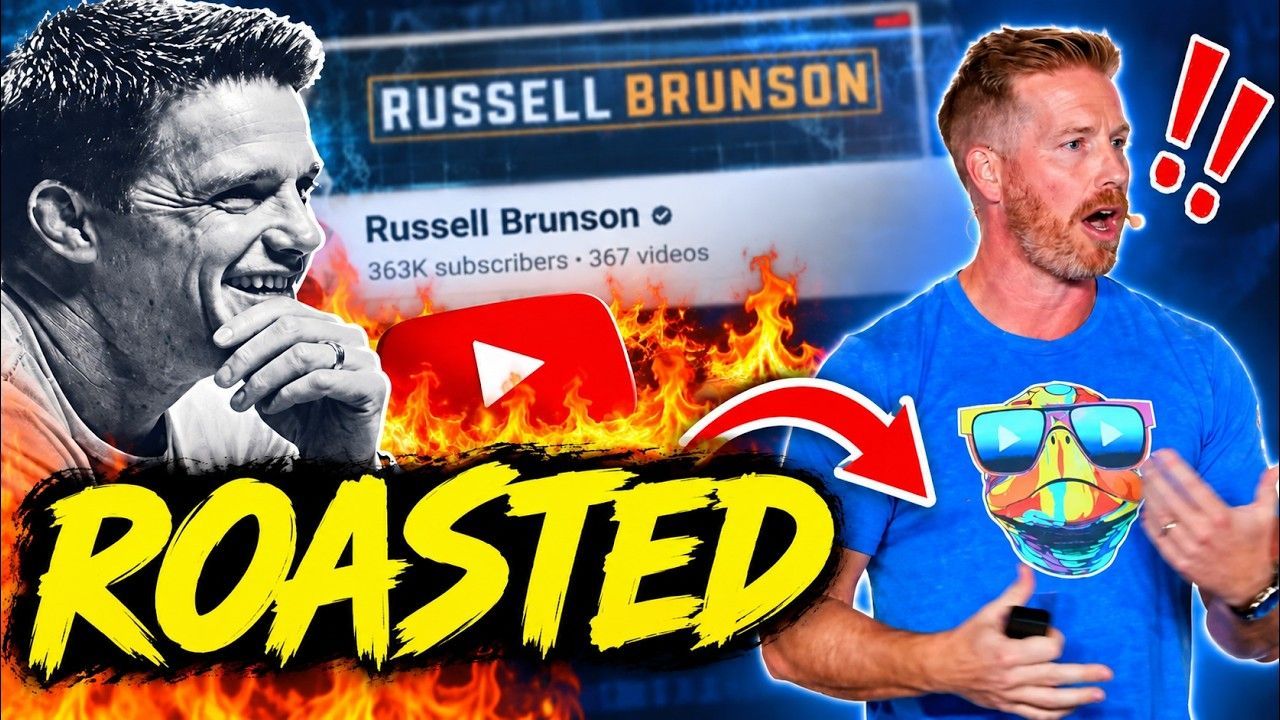
Let’s be honest: back in 2020, I was a 41-year-old Army veteran who had spent three years living the ultimate teacher’s dream schedule—traveling through 24 countries with summers off, living comfortably on consulting income. Then the world shut down. Suddenly, my global consulting gig vanished overnight. I found myself asking a terrifying question: How do I start over without actually starting over? I almost gave up entirely to sell tacos and cold beer on a beach somewhere in the tropics. But instead, I burned through over $200,000 of my own cash trying out courses, Amazon stores, and real estate mentorships. That’s when I hit the hard wall: every standard guru told me that if I wanted to make it in real estate, I’d have to start cold calling, door knocking, and driving around neighborhoods hunting for overgrown lawns. After 20+ years in active sales, I was completely exhausted from chasing clients down. I didn't want to prospect anymore. I wanted attraction. Here is how I cracked the code using YouTube, grew my brand Passive Prospecting , generated over $6 million in real estate commissions without spending a single penny on ads—and why I recently decided to break down click-funnel legend Russell Brunson ’s YouTube channel to show how anyone can fix their leaky sales funnel.
When most real estate agents think about retirement after nearly three decades in the industry, they picture kicking back, slowing down, and stepping away from the daily hustle. But my good friend Heidi Hines from East Tennessee had a slightly different idea. After 28 years in real estate—selling across major markets like Charlotte, NC and Las Vegas, NV —she relocated to East Tennessee and decided to try something entirely new: YouTube video marketing. She wasn't looking to build an empire. In fact, she was practicing being retired while sipping morning coffee on her screen porch when she decided to give video a shot. Fast forward just seven to eight months: Heidi has published over 70 videos, closed multiple transactions, generated over 76 hot inbound leads, and recently had a single video explode to over 95,000 views! Her lead pipeline is so overflowing with high-intent cash buyers ($500k+ budget range) that her local partner team literally can't keep up with the volume and is actively hiring new agents just to handle the overflow.

When most real estate agents think about targeting non-English speaking markets in Texas, the default strategy is almost always Spanish. But what happens when you go completely against the grain and target a niche secondary language in a booming metropolis? In a recent episode of our podcast, my partner Travis Plum and I sat down with my good friend Natalia Toretto . She is a former architect from Brazil who moved to Texas and built a massive real estate business by creating a YouTube channel entirely in Portuguese. Her results blew me away.

Can one single YouTube subscriber change the entire trajectory of your real estate business? If you asked Yitz Pearson a few years ago, he might have been skeptical. But today, Yitz stands as living proof that a single online connection can completely transform your career. My partner Travis Plum and I recently sat down with Yitz from New Braunfels, Texas. He shared a story that blew our minds: closing over 120 transactions generating $25M+ in volume—all from ONE single client who found him on YouTube.
How many times have you told yourself, “I just don’t have enough time”? If you’re a real estate agent trying to break through the noise of cold calling and expensive ads, time is usually your primary excuse for not launching that YouTube channel or taking on a massive new passion project. In the latest episode of our podcast, my partner Travis Plumb and I broke down a story from our own team that completely shatters this time myth. It’s a powerful testament to what happens when you stop waiting for things to line up, step outside your comfort zone, and actively engineer your own luck.
Cold calling, door knocking, and burning cash on ad campaigns can drain the life out of any real estate agent. If you are tired of the endless grind, there is a better way to build a sustainable, highly profitable business without chasing leads down manually. I sat down with my good friend Chris Roberts , a real estate agent based out of Southeast Tennessee who lives in a tiny community of just 500 people. Despite operating from such a small footprint, Chris closed 14 deals totaling $6.5 million in production and roughly $140,000 in GCI over the last 12 months —all generated passively from YouTube. Here is how Chris turned video content into a lead engine, survived a tough first year, and built a consistent stream of inbound clients.
Let’s be honest: back in 2020, I was a 41-year-old Army veteran who had spent three years living the ultimate teacher’s dream schedule—traveling through 24 countries with summers off, living comfortably on consulting income. Then the world shut down. Suddenly, my global consulting gig vanished overnight. I found myself asking a terrifying question: How do I start over without actually starting over? I almost gave up entirely to sell tacos and cold beer on a beach somewhere in the tropics. But instead, I burned through over $200,000 of my own cash trying out courses, Amazon stores, and real estate mentorships. That’s when I hit the hard wall: every standard guru told me that if I wanted to make it in real estate, I’d have to start cold calling, door knocking, and driving around neighborhoods hunting for overgrown lawns. After 20+ years in active sales, I was completely exhausted from chasing clients down. I didn't want to prospect anymore. I wanted attraction. Here is how I cracked the code using YouTube, grew my brand Passive Prospecting , generated over $6 million in real estate commissions without spending a single penny on ads—and why I recently decided to break down click-funnel legend Russell Brunson ’s YouTube channel to show how anyone can fix their leaky sales funnel.
When most real estate agents think about retirement after nearly three decades in the industry, they picture kicking back, slowing down, and stepping away from the daily hustle. But my good friend Heidi Hines from East Tennessee had a slightly different idea. After 28 years in real estate—selling across major markets like Charlotte, NC and Las Vegas, NV —she relocated to East Tennessee and decided to try something entirely new: YouTube video marketing. She wasn't looking to build an empire. In fact, she was practicing being retired while sipping morning coffee on her screen porch when she decided to give video a shot. Fast forward just seven to eight months: Heidi has published over 70 videos, closed multiple transactions, generated over 76 hot inbound leads, and recently had a single video explode to over 95,000 views! Her lead pipeline is so overflowing with high-intent cash buyers ($500k+ budget range) that her local partner team literally can't keep up with the volume and is actively hiring new agents just to handle the overflow.